
Freedom from Large Surgical Cavities
Traditional surgical excision of pilonidal sinus cuts out a massive wedge of gluteal tissue, resulting in open wounds requiring 8 to 16 weeks of painful daily packing. Minimally invasive Ksharsutra therapy removes the sinus from within, achieving over 98% cure without wide skin mutilation.
1. Etiology: The Hair-Burrowing Theory
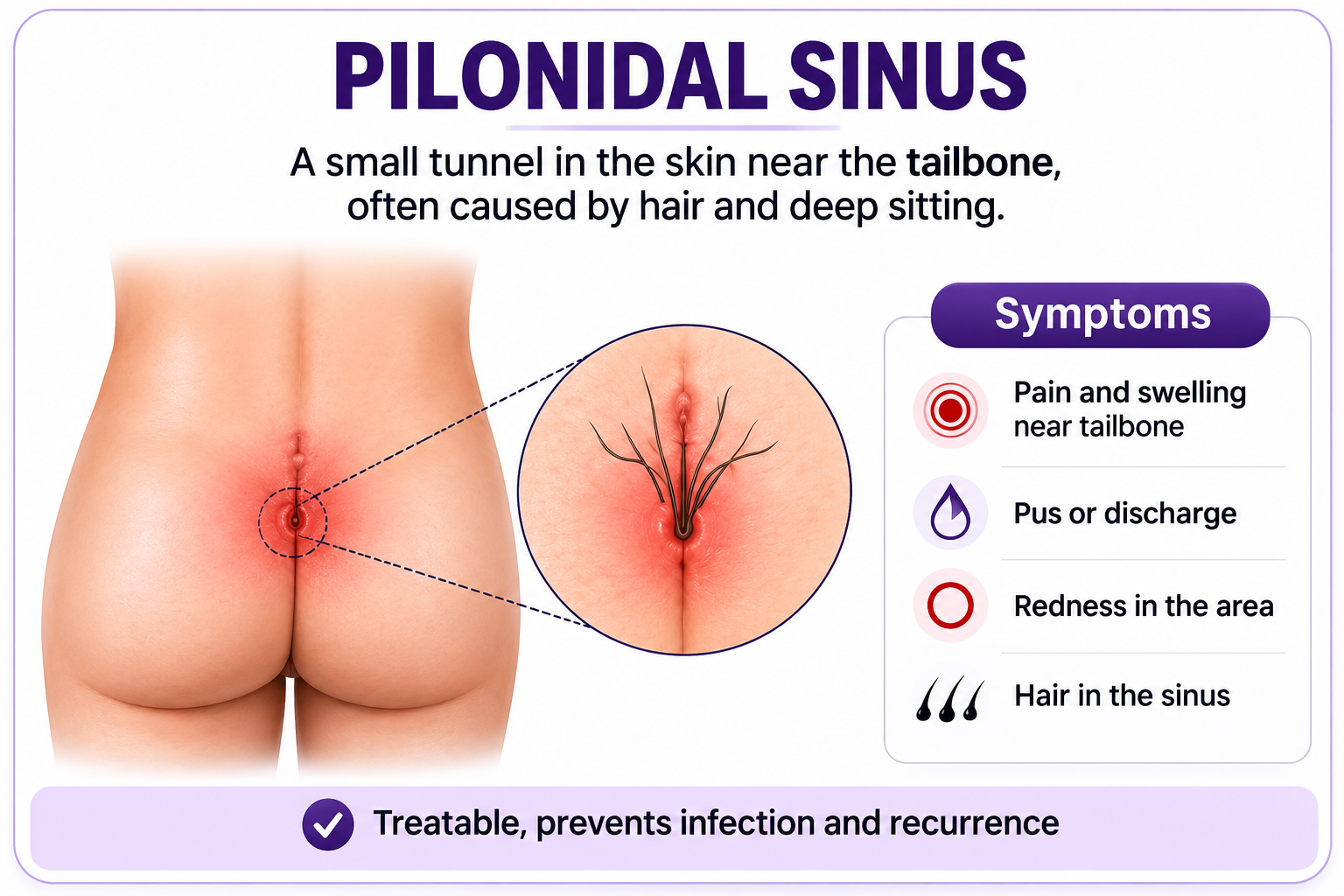
Pilonidal sinus disease (PNS; Latin: pilus = hair, nidus = nest; Nadi Vrana in Ayurveda) is an acquired chronic inflammatory disorder occurring in the sacrococcygeal region (natal cleft). Although historically thought to be congenital, modern surgical science (Karydakis and Bascom theories) confirms it is acquired:
- Hair Shedding: Stiff hairs shed from the scalp, back, or buttocks accumulate in the deep natal cleft.
- Mechanical Drilling: Friction during walking and prolonged sitting causes barbed hair scales to burrow root-first into suction-prone hair follicles and skin pits.
- Foreign Body Granuloma: As hairs penetrate the subcutaneous tissue, the immune system initiates a foreign-body reaction, creating an infected cavity with discharging cutaneous tracts.
2. The 4AXIS Minimally Invasive Ksharsutra Method
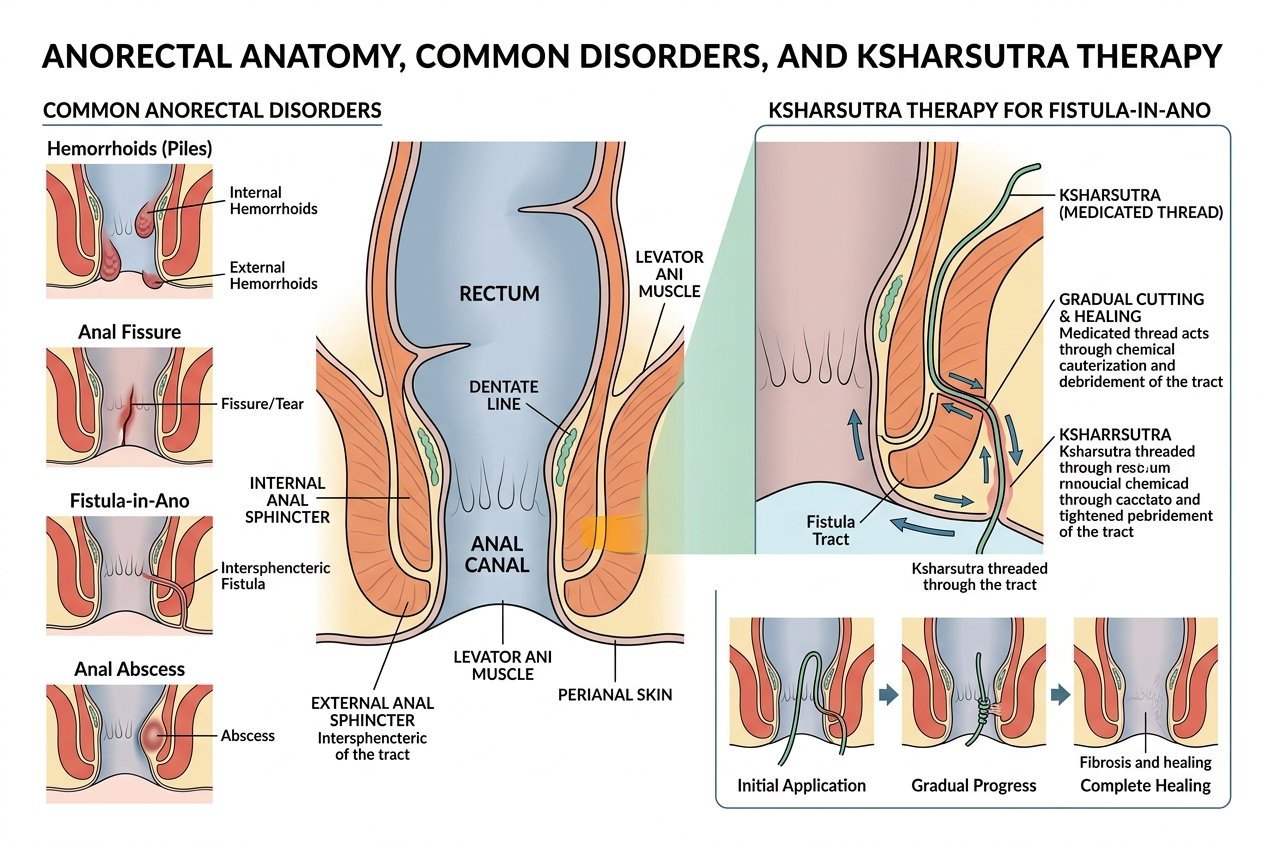
Instead of cutting away large amounts of healthy skin, Dr. Upendra performs a precise, sphincter-safe debridement using medicated Ksharsutra:
- Micro-Curettage: Under local anesthesia, all trapped hair nests and debris are extracted through the natural pit openings without wide incisions.
- Medicated Thread Insertion: A thin Barbour Ksharsutra is threaded through the primary track. The alkaline Apamarga and proteolytic Snuhi agents chemically liquefy the pyogenic sinus wall.
- Floor-Up Granulation: The antiseptic curcuminoids of Haridra stimulate granulation tissue from the deepest base toward the surface, leaving minimal scar tissue and preventing natal cleft deformities.
Patient Benefits
Zero hospital admission, negligible blood loss, recurrence rate under 2%, and full resumption of normal daily sitting and light duties within 48 hours.