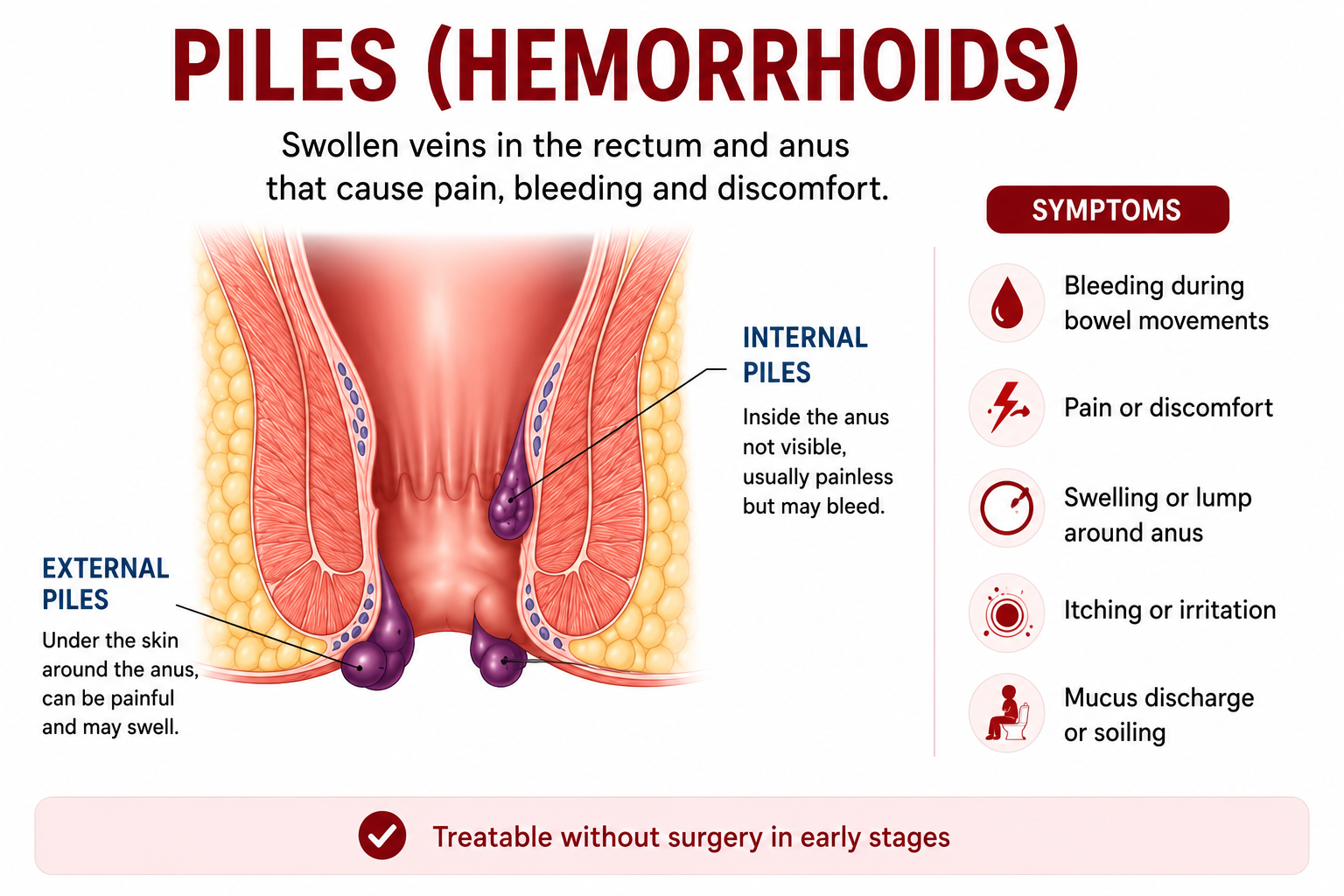

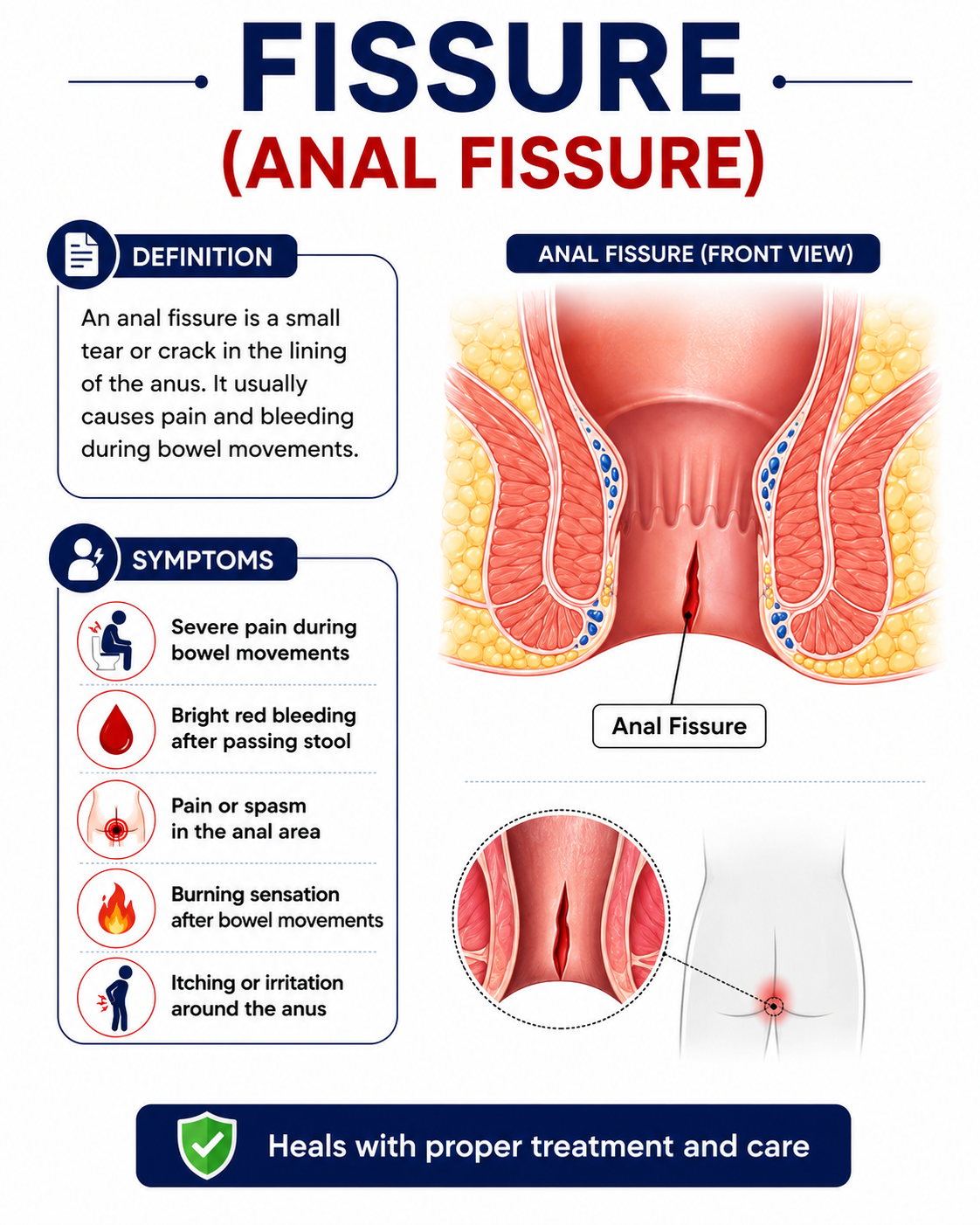
1. Anatomy & Location of Anal Fissures
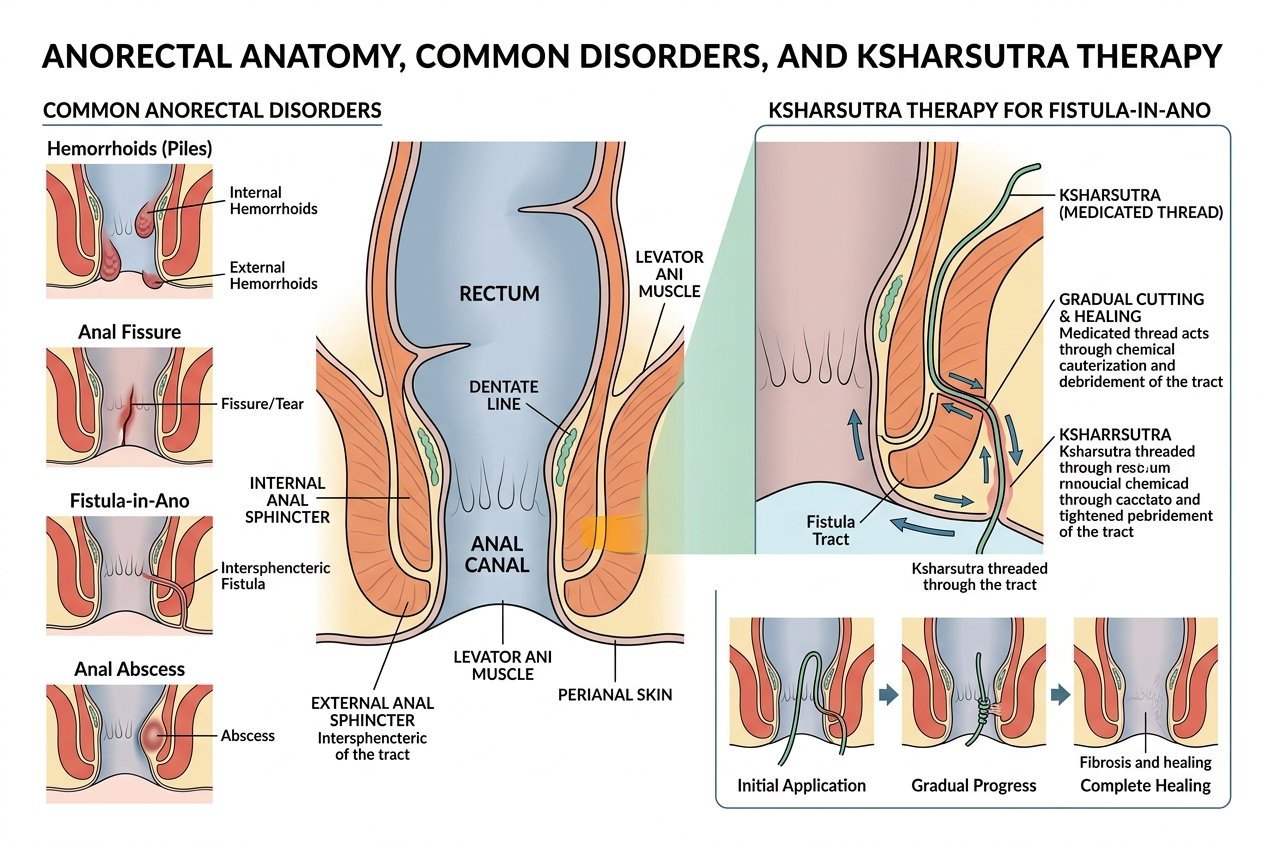
An anal fissure is an longitudinal split or ulcer in the squamous epithelium (anoderm) of the lower anal canal, situated between the dentate line and the anal verge. Approximately 90% occur in the posterior midline and 10% in the anterior midline. The posterior commissure has the poorest blood supply in the anal canal, creating an anatomical watershed zone vulnerable to ischemic ulceration.
2. The Vicious Cycle of Chronicity
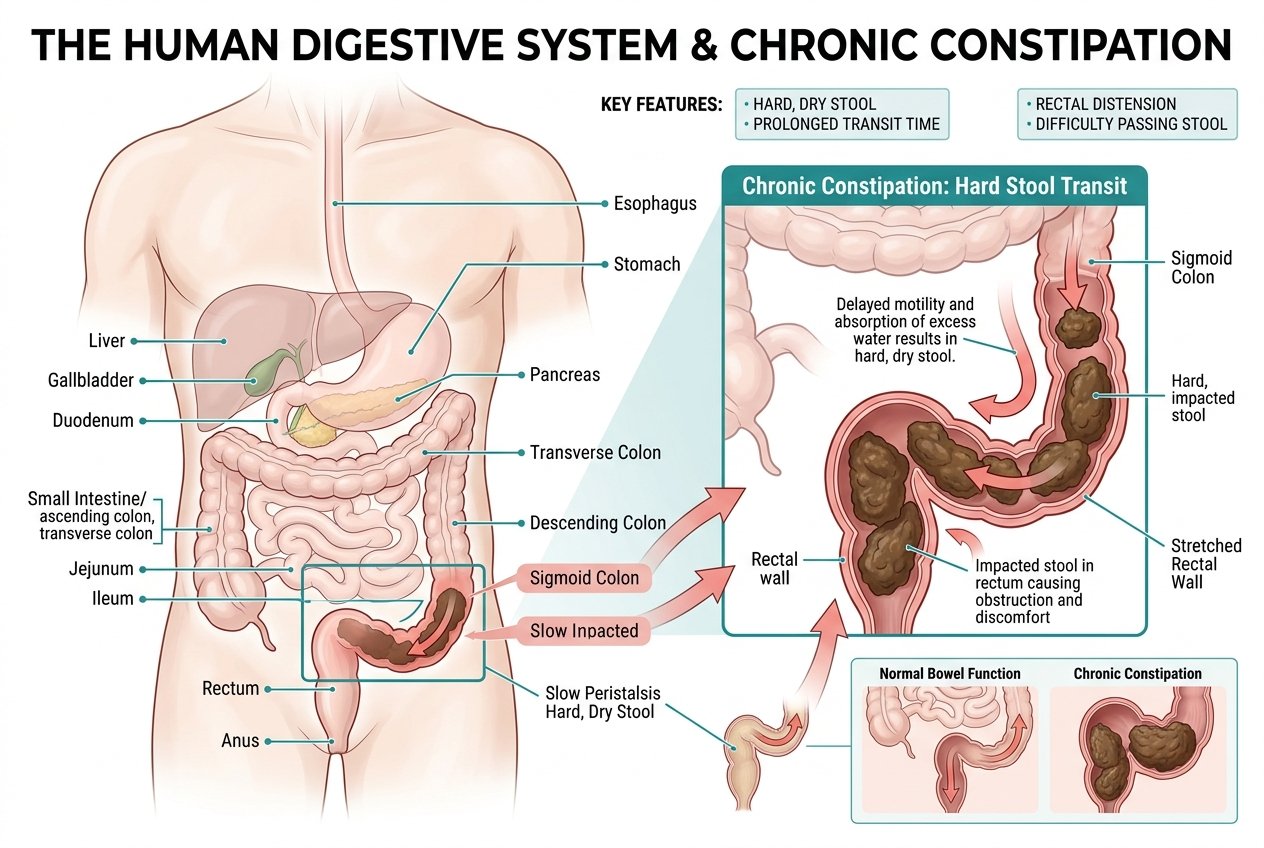
- Mechanical Shearing: Hard, dry, compressed fecal bolus tears the delicate posterior anoderm during severe straining.
- Sphincteric Hypertonia: The exposed raw sensory nerve endings trigger an immediate reflex contraction (spasm) of the circular internal anal sphincter.
- Micro-Ischemia: High resting anal canal pressure exceeds microvascular capillary pressure, cutting off blood and oxygen delivery to the fissure bed.
- Chronic Triad: Without perfusion, the fissure cannot granulate. Within 4 to 6 weeks, it becomes a chronic indurated ulcer, forming a swollen skin tag at the anal verge (sentinel pile) and an enlarged anal papilla internally.
3. 4AXIS Non-Surgical Therapeutic Protocol
Conventional surgery (Lateral Internal Sphincterotomy / LIS) permanently divides the internal sphincter muscle, carrying up to a 10–15% lifetime risk of minor flatus incontinence. Dr. Upendra deploys a completely non-invasive, muscle-preserving Ayurvedic protocol:
Warm medicated baths infused with Panchavalkala extract relax hypertonic smooth muscle fibers, immediately alleviating reflex spasm and restoring oxygen perfusion.
Classical medicated ghee containing neem, jasmine, and copper sulphate accelerates re-epithelialization and soothes burning pain on defecation.
For fibrotic chronic ulcers, microscopic Kshara application debrides sluggish wound margins, stimulating healthy bleeding and primary tissue closure.
Excruciating defecation pain significantly subsides within 24 to 48 hours; mucosal closure and full healing are typically achieved within 10 to 14 days without surgical blades.