
1. Pathophysiology: The Cryptoglandular Hypothesis
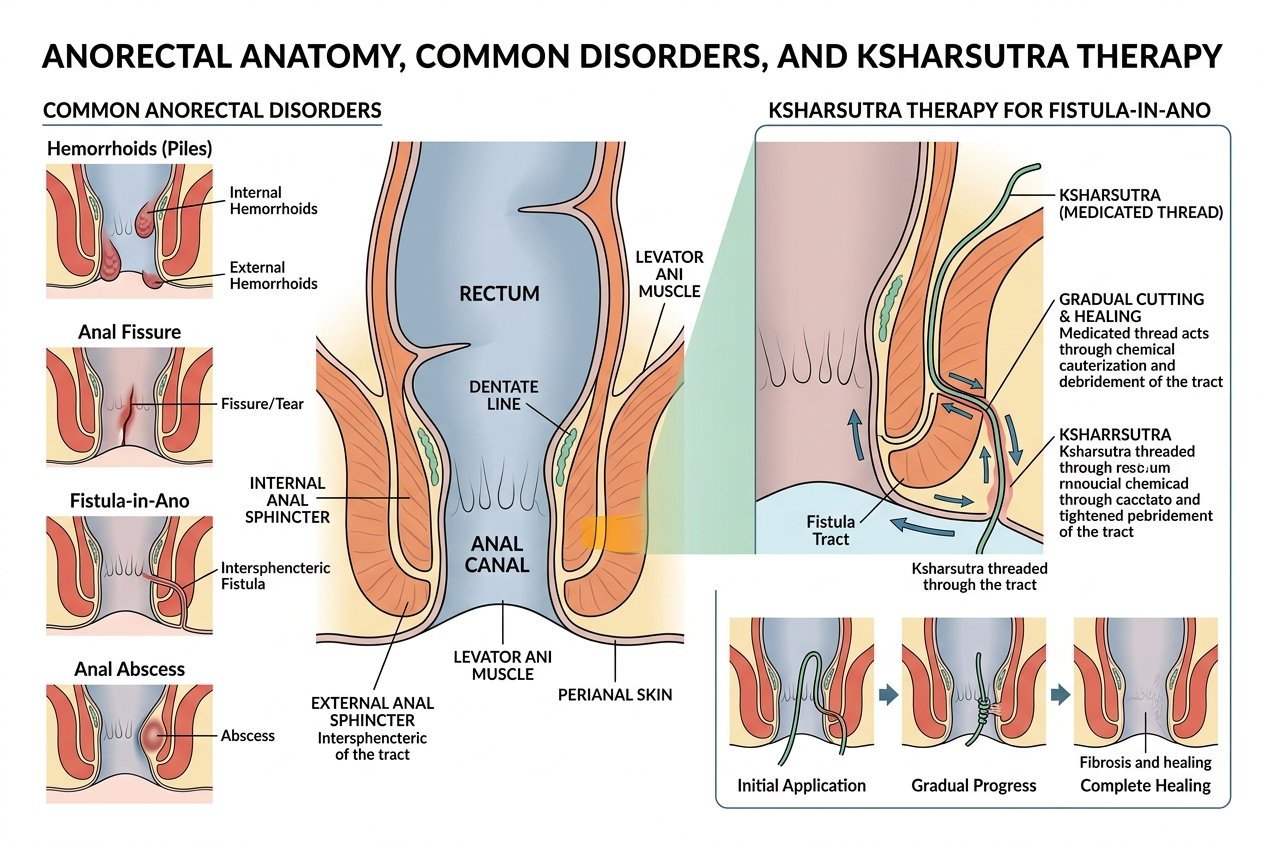
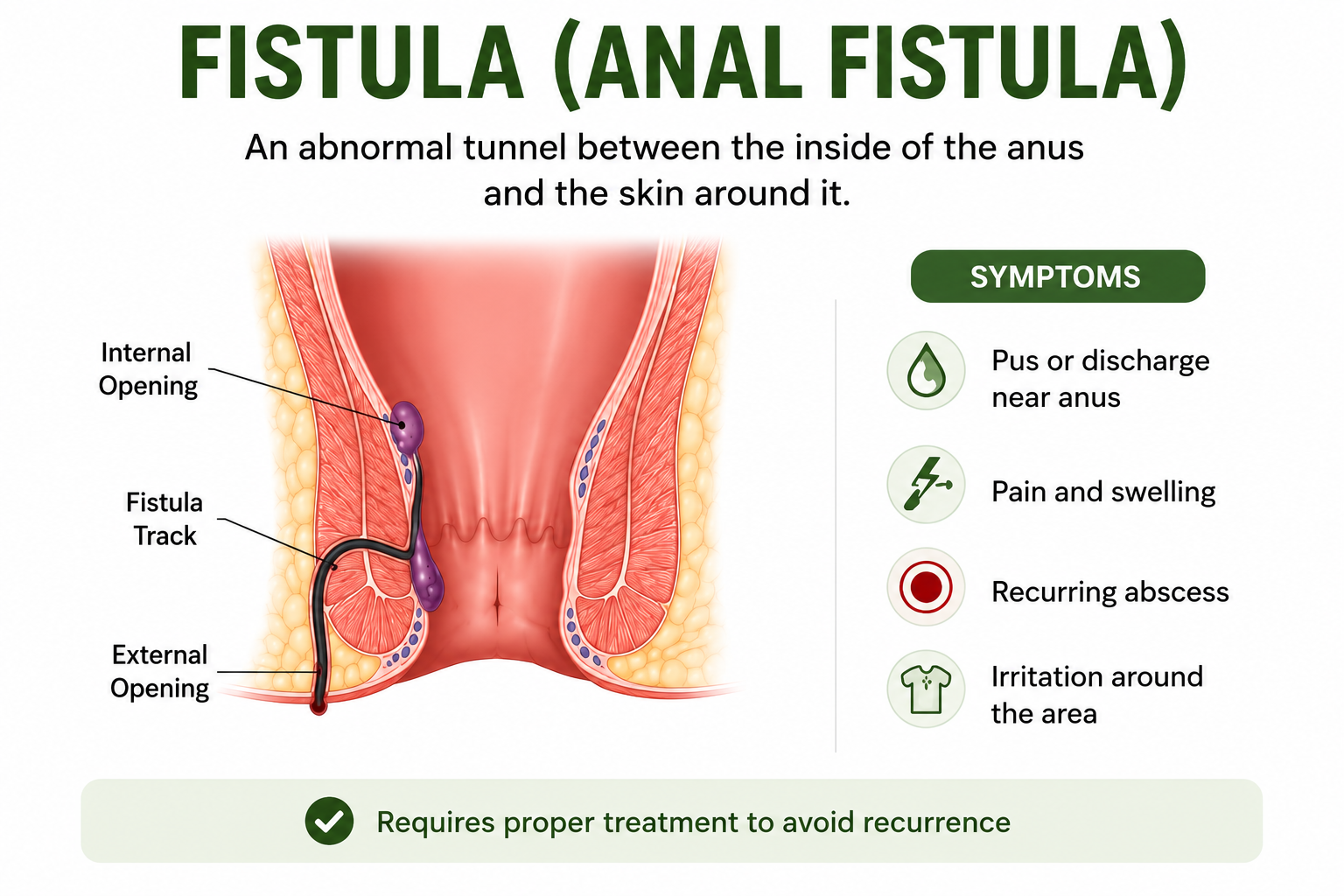
Anal fistulas (Fistula-in-Ano / Bhagandara in Ayurveda) originate in 90–95% of cases from an infected anal intramuscular crypt gland at the dentate line (crypts of Morgagni). Stagnant debris and fecal matter obstruct the gland duct, leading to an acute intersphincteric perianal abscess. When this abscess ruptures or is surgically incised without addressing the source crypt, a chronic, epithelialized granulation tunnel remains, discharging pus, blood, and serous fluid onto the perianal skin.
2. Goodsall's Rule & Parks Anatomical Classification
Understanding fistula trajectory is critical for safe management:
- Goodsall's Rule: An imaginary transverse line drawn through the center of the anus divides anterior and posterior fistulas. External openings anterior to this line typically track directly in a radial straight line to the dentate line. External openings posterior track in a curved course entering the posterior midline at the 6 o'clock position.
- Parks Classification: Categorizes tracts into Intersphincteric (70%), Transsphincteric (20–25%), Suprasphincteric (5%), and Extrasphincteric (1–2%), depending on their relationship to the internal and external anal sphincters.
3. Surgical Fistulectomy vs. Kshar Sutra
| Clinical Metric | Conventional Fistulectomy | Ayurvedic Kshar Sutra Therapy |
|---|---|---|
| Incontinence Risk | 30% to 40% (gas/flatus or liquid stool leakage) | 0% (Sphincter architecture 100% preserved) |
| Recurrence Rate | 15% to 30% (frequent secondary surgeries) | < 1.5% (scientifically validated by ICMR) |
| Hospitalization | 3 to 7 days hospital bed rest | Outpatient day-care walk-in (no admission needed) |
| Wound Care | Large gaping wound; 8–12 weeks painful dressings | Microscopic tract drainage; simple daily home washing |
| Anesthesia | General or spinal block | Gentle local nerve block |
4. The Science of Kshar Sutra: Simultaneous Cut and Heal
Kshar Sutra is prepared using surgical Barbour linen thread #20 coated sequentially 21 times with three botanical and mineral agents:
- 11 Coatings of Snuhi Ksheera (Latex of Euphorbia neriifolia): Rich in proteolytic enzymes (euphorbon), it enzymatically digests the unhealthy epithelial lining and sloughs necrotic debris.
- 7 Coatings of Apamarga Kshara (Alkali ash of Achyranthes aspera): Maintains an alkaline pH of 9.5 to 10.5, exerting strong bactericidal action against anaerobes and chemically cauterizing the crypt gland.
- 3 Coatings of Haridra Churna (Turmeric powder, Curcuma longa): Provides powerful antiseptic, anti-inflammatory, and fibroblastic stimulation to promote healthy granulation.
The Continence Mechanism: As the medicated thread gradually cuts through the fistulous tract and sphincter fibers over several weeks, inflammatory fibrosis and granulating collagen bridge the muscle ends immediately behind the advancing thread. The sphincter never separates or retracts, entirely eliminating the risk of fecal leakage.
Under the specialized care of Dr. Upendra, Kshar Sutra is inserted through a flexible probe under local anesthesia. Patients walk home immediately after the 15-minute procedure and resume active office work within 24 to 48 hours.